How Coursebox Scales Safely: Zero-Fear Releases at B2B2C Scale
Discover how AI course creation tool Coursebox handles millions of users, tests features live in production, and instantly rolls back bugs using RocketFlag, all for a flat $79/month.
Published on July 1, 2026

Shipping new features is the lifeblood of any fast-moving software company. But when you’re building a leading AI course creation tool serving millions of users, that lifeblood can quickly turn into a high-stakes liability.
For Coursebox, a B2B2C platform that empowers educators and businesses to build AI-driven courses, moving fast is a necessity. However, in a B2B2C model, your customers are hosting course generation for their own end-users. A single broken interface or API timeout doesn’t just affect one user; it ripples across entire organizations.
To handle this pressure, Coursebox needed a way to release features to production, test them live with real traffic, and instantly roll back if anything went wrong.
And they needed to do it without paying a massive "success tax."
Here is how they did it with RocketFlag.
The Challenge: Staging is a Lie, and Staging at Scale is Expensive
If you’re still relying solely on staging environments to catch bugs, you’re playing a risky game. Staging is, at best, a clean-room approximation of reality. It rarely mirrors the chaotic variety of real user behavior, let alone the unpredictable latency of upstream AI models.
To truly know if a new section of the course generation flow is stable, you have to test it in production.
But traditional continuous deployment (CD) pipelines have a major bottleneck: the rollback loop. If a developer deploys a new Angular component that crashes under load, rolling it back typically requires:
- Reverting a commit in git.
- Waiting for the CI/CD pipeline to rebuild (10–15 minutes).
- Redeploying the old build to production.
In that 15-minute window, thousands of users experience a broken application, support tickets spike, and trust is lost.
Coursebox looked at traditional feature flag and product analytics tools like PostHog and LaunchDarkly. But they ran into two major blockades:
- Bloated Complexity: The engineering team wanted a fast, developer-centric tool to control rollouts, not an overly complex data-warehouse-in-a-box.
- The Success Tax: Traditional platforms charge based on event volumes or active users. Because Coursebox operates on a B2B2C model with millions of end-users, volume-based pricing would quickly scale to tens of thousands of dollars annually. They were effectively being penalized for growing.
The Solution: Simple Decoupling with RocketFlag
Coursebox integrated RocketFlag across their stack: an Angular frontend and a Node.js backend.
One of the neatest architectural decisions they made was leveraging RocketFlag’s Node SDK on the client-side. Because the SDK utilizes native JavaScript API calls, it works seamlessly within their Angular application, allowing developers to use a unified API across the entire codebase.
Testing Live in Production
When Coursebox rolls out a new feature, such as a major update to the course generation step, they wrap the new logic in a RocketFlag toggle.
// Angular component evaluating the new course generation flow section
import { RocketFlagClient } from 'rocketflag-node-sdk';

const rfClient = new RocketFlagClient({ sdkKey: 'your-sdk-key' });

// Evaluate feature flag for the current user
const showAdvancedAIBuilder = await rfClient.evaluate('new-course-generator-section', {
  userId: currentUser.id,
  tenantId: tenant.id // B2B tenant tracking
});

if (showAdvancedAIBuilder) {
  this.renderAdvancedAIBuilder();
} else {
  this.renderLegacyAIBuilder();
}
The code is deployed "dark", meaning it sits in production but is inactive for the general public. Developers can target themselves and internal testers first. Once verified, they can roll it out to a small percentage of external users to monitor stability.
BEFORE (Flag Off)
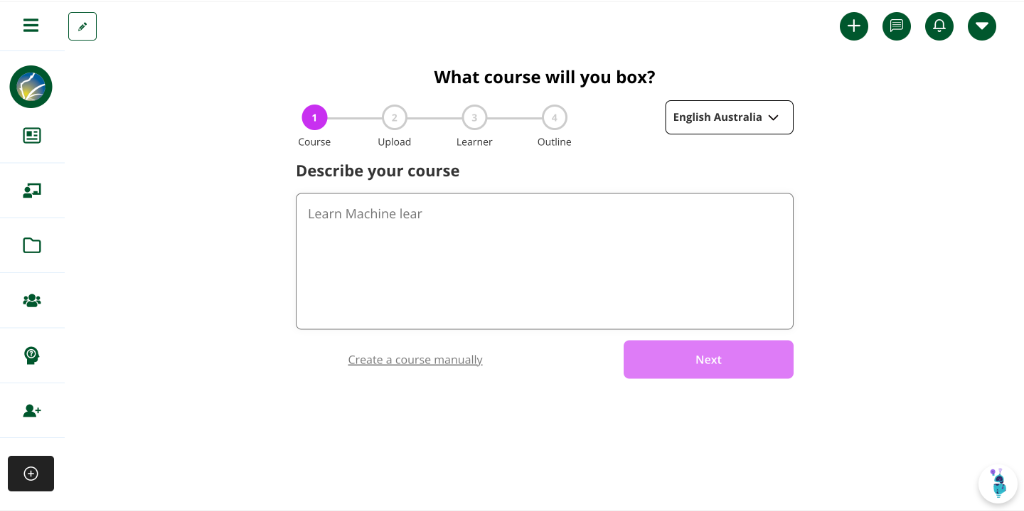
The legacy, basic course generator interface
AFTER (Flag On)
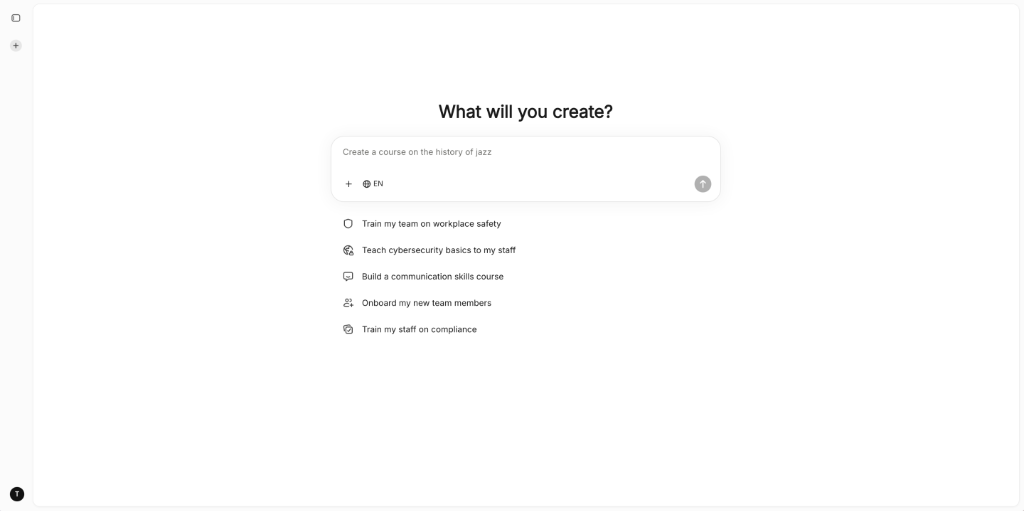
The new advanced AI course generation flow section
The Millisecond Kill Switch
If the new feature behaves unexpectedly (for example, if a generative AI model returns an unparseable format or latency spikes), the rollback is instantaneous.
Instead of waiting for a code revert and pipeline rebuild, the owner of the ticket simply flips the toggle to OFF in the RocketFlag dashboard. Within milliseconds, all incoming traffic is routed back to the legacy course builder.
Because RocketFlag’s dashboard is clean and user-friendly, anyone on the team can safely trigger a rollback if they spot an issue. The blast radius of the bug is restricted to a tiny cohort, and the fix is immediate.
Scaling to Millions without the Success Tax
By switching to RocketFlag, Coursebox decoupled their engineering scaling metrics from their billing metrics.
While alternative platforms would have scaled into the tens of thousands of dollars for millions of end-user evaluations, Coursebox pays a flat, predictable $79/month with RocketFlag.
This predictability allows them to focus 100% of their energy on optimizing their AI course generator, rather than writing custom filtering code to avoid event limits on their telemetry tools.
Speed, Safety, and Sanity
By adopting RocketFlag, Coursebox has made Friday deployments a non-event. They have the safety net they need to innovate rapidly at scale:
- Release when ready: Code deployment is a technical event; release is a business decision.
- Instant recovery: Zero-downtime rollbacks in milliseconds.
- Predictable costs: Scaling to millions of users without enterprise pricing bloat.
If you’re ready to take the fear out of your releases and stop paying the success tax, sign up for RocketFlag today.
And if you’re looking to build modern, AI-powered courses for your business or students, check out what the team is building over at Coursebox.